
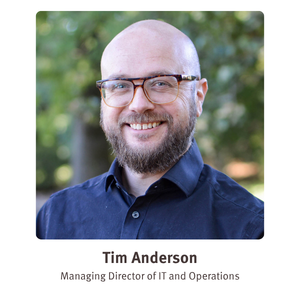
 AI is evolving quickly, and so is how TPG uses it. We recently spoke with Tim Anderson, Managing Director of IT and Operations, and Timothy Escher, IT Automation and AI Specialist, about the latest AI innovations and how they’re being applied across the company. From productivity gains to security considerations, they shared how TPG is adopting AI in a thoughtful, practical way.
[Responses were edited for length and clarity.]
Q: What are TPG’s goals with AI?
Tim A: In the short term here at TPG, it’s about identifying ways to boost productivity and helping everyone work more efficiently. In the long term, the focus goes beyond efficiency; it’s about helping our employees make better, more informed decisions while keeping human judgment at the center.
Q: What AI tools are we currently using?
Tim A: TPG primarily uses Microsoft Copilot because it integrates into our existing Microsoft environment and aligns with our enterprise‑level security, privacy, and governance standards. This allows employees to explore AI safely using tools that respect our existing data controls.
Q: How is success being measured so far?
Tim A: Early success is measured using simple indicators such as employee engagement with AI tools and how frequently they’re being used. These insights help IT understand adoption trends, identify barriers, and determine where additional support or training is needed.
Q: Can you share an example of how AI is making an impact?
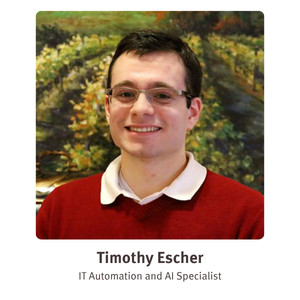 Tim E: In one division, AI is being used to research, identify insurance‑relevant characteristics, and summarize findings for further analysis. What once took several hours can now be completed in a fraction of the time, with a final human review ensuring accuracy and quality. Additionally, we’ve built an internal tool, a calendar bot. You simply input the people you need in a meeting and the time frame, and it quickly returns a few date and time options.
Q: What challenges has TPG faced with AI adoption?
Tim A: The biggest challenge we face is the misunderstood capability of AI—what it can currently do versus what’s advertised. I think the root of the problem is the assumption that you can input a prompt and it will do exactly what you imagine, but without specific guidance and proper governance, it just won’t deliver. And that’s only part of it. Employees also need a solid understanding of their own workflows for the automation to be successful.
Tim E: Security concerns, like with any new technology, are a major challenge in adoption. Additionally, there is a need to upskill those who should adopt it. Teaching people how to use new technology is a challenge in itself.
Q: How is TPG supporting employees as they adopt AI?
Tim A: We have been working with our Learning & Development team to create foundational AI training that helps employees understand what AI can and cannot do. The goal is to establish a shared baseline of knowledge before introducing more advanced use cases. There is a lot of information out there, and it can be overwhelming. However, we want to ensure that our employees focus on what matters most to TPG: our clients’ privacy and security.
Q: How does TPG ensure data privacy and security with AI?
Tim A: TPG has implemented strong governance through written policies and technical controls. One reason Copilot is so helpful is that we can implement our enterprise permissions and security that’s already in place. This means that we can restrict access to our most secure and important data. Additionally, we have established two separate governance boards. One focuses solely on AI and its adoption, aiming to balance innovation with the company’s information security, and the other is centered on data. This data governance board works to maintain that balance amid requests for innovation. And together, those two things form the pillars of our AI security footprint.
Q: What’s next for AI at TPG?
Tim A: The most exciting opportunities aren’t about new technology alone, but about refining workflows, reducing friction, and helping teams focus more on high‑value work—while maintaining trust, security, and responsible use. I find it very exciting to see what we can achieve with automation and by empowering our employees to do what they do best, serving our clients
****